

What to Know About The UK’s New, Groundbreaking Strategy to End Animal Testing


This article breaks down the UK’s new plan to phase out animal testing: explaining what the strategy involves, why it matters, and how it will work in practice. It covers current animal testing figures, key deadlines, suggested alternative methods, and funding commitments. Plus, you’ll learn how animal welfare groups and scientists feel about the strategy.
On November 11, 2025, the UK government made history by publishing the world’s first strategy to progressively phase out animal testing.
The strategy, announced by UK Science Minister Lord Vallance, is titled, “Replacing animals in science: A strategy to support the development, validation and uptake of alternative methods.”
The document runs over 60 pages, so it may be a lot to take in. But I’ve done the research and gone through it to help you get the specifics.
The Current State of Animal Testing in the UK
In 2024 alone, 2.64 million procedures were conducted on animals in the UK.
During these experiments, animals like mice, rabbits, dogs, monkeys, and birds experience invasive surgeries, toxic exposures, and even fatal outcomes.
Yes, some of the procedures contribute to life-saving drugs and treatments—however, this comes at the cost of severe suffering for countless animals.
But it seems change is on the horizon: the UK’s new strategy aims to end this reality by adopting alternative methods wherever possible.
Key Timeline and Targets
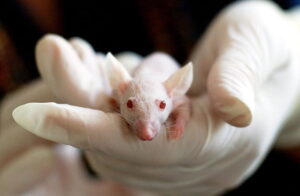
Laboratory rat | Source: PickPik
Here’s a look at the deadlines set for phasing out animal tests, contained in the strategy:
By the end of 2025:
- Eliminate the rabbit pyrogen test, where rabbits are injected with substances to detect fever-causing contaminants in medicines
By the end of 2026:
- Stop skin and eye irritation tests that currently involve chemical exposure to assess safety and potential harm
- End skin sensitisation tests, where mice & guinea pigs are injected with substances to determine if they trigger allergic reactions
- Also, establish a UK Centre for the Validation of Alternative Methods (UKCVAM) to fast-track approval of animal-free testing
By 2027:
- Phase out—except in rare medical occasions—mouse testing for botulinum toxin potency, ending the practice of injecting mice with deadly neurotoxin
By 2028:
- Expiration of licenses that authorise the forced swim test (FST)
By 2030:
- Reduce (by at least 35%) pharmacokinetic studies (which assess how drugs move through the body) on dogs and non-human primates
- Lessen (by at least 50%) the use of non-human primates and dogs in cardiovascular safety studies
- End antibody production in animals through repeated injections and invasive blood extraction
It’s also worth noting that the strategy groups animal tests into three “baskets” based on readiness for replacement:
Basket 1: Tests with potential for rapid replacement
- Rabbit pyrogen testing
- Skin irritation tests
- Adventitious agent testing
- Eye irritation tests
- Skin sensitisation tests
- Botulinum toxin batch potency testing
- Preclinical animal testing of biologicals
- Development and quality control testing of veterinary medicines and vaccines
Basket 2: Tests requiring further development
- Forced swim test
- Fish acute toxicity tests
- Pharmacokinetic studies
- Cardiovascular safety studies
- Antibody production
Basket 3: Tests with no current viable alternatives
- Fish endocrine disruption tests

Laboratory Rabbit | Source: Wikimedia Commons
Alternative Methods
The strategy promotes other approaches that can be used in place of animal testing:
- 2D cell cultures: This is one of the earliest scientific approaches, and it involves cells growing flat on plastic surfaces. While useful for basic insights into cell biology, drug mechanisms, and toxicity, these simple models can’t fully replicate the complex environment of living tissues.
- 3D cell cultures & organoid models: They allow cells to grow in three dimensions with supportive cells and matrices that better mimic real human tissue environments. These more complex models (like spheroids and tissue-engineered constructs) are now key tools in fields like oncology.
- Stem cell technologies: Induced pluripotent stem cells (iPSCs) provide a renewable, patient-specific source of human cells for studying diseases and more.
- Gene editing: Technologies like CRISPR can introduce disease-associated genetic changes into cells to enable precise modelling of human diseases.
- Organ-on-a-chip systems: These are miniature 3D devices that mimic how human organs—such as livers and lungs—work using real human cells.
- Artificial Intelligence (AI): AI can identify patterns in massive & complex datasets and predict outcomes that would be difficult to determine otherwise. This makes AI models invaluable for drug discovery, disease classification, and biomarker identification.
However, there are some limitations to the extensive adoption of these alternative methods, including:
- Limited availability of mature alternative technologies
- Insufficient long-term funding
- Gaps in skills and access to technology
- Lack of accessible case studies and best-practice examples
- Concerns about acceptance within the scientific community
Funding Commitments
The strategy is backed by £75 million in total funding. Of this, £60 million will establish a hub that brings together data, technology, and expertise to help researchers collaborate, plus a separate centre to speed up regulatory approval for new alternatives.
Furthermore, the Medical Research Council, Innovate UK, and the Wellcome Trust jointly committed £15.9 million. This funding will advance human lab models, including organ-on-a-chip systems. Five UK teams will concentrate on creating disease models of the liver, brain, cancer, pain, and blood vessels.
Public Responses
Finally, let’s take a look at how the public feels about the UK’s new plan.
Overall, it has received a mixed, but mainly positive, response from diverse stakeholders. The RSPCA welcomed the plan as a “significant step forward,” noting that 77% of UK adults support the government’s commitment to phasing out animal testing.
PETA called the roadmap a “historic first step” but emphasised that it must not become “more than a PR exercise.” The organisation pushed for investment in cutting-edge, animal-free technologies like organs-on-chips and predictive computer models.
However, Cruelty Free International expressed disappointment that the autumn Budget failed to provide detailed confirmation of the promised £75 million funding, with their Head of Public Affairs stating it was disappointing not to see more specifics about how the money would be allocated.
The scientific community expressed cautious support, combined with significant concerns. Robin Lovell-Badge from the Francis Crick Institute warned that the strategy gears too much towards regulatory testing rather than discovery science, and that pushing the agenda too hard could demotivate excellent animal technologists who are essential to UK biomedical research.
Lovell-Badge also questioned whether alternative methods would be ready by 2030 for pharmacokinetic studies, asking if the strategy’s authors would be willing “guinea pigs” to test novel drugs developed without animal testing.
Professor Matthew Gibson, Chair of Sustainable Biomaterials at the University of Manchester, welcomed the strategy and praised its role in positioning the UK at the forefront of non-animal research methods. However, he stressed that researchers need better access to these alternative models. Gibson argued that the scientific community urgently needs technology to store and distribute cell models effectively.
But let’s give you the floor—what do YOU think about this new strategy? Let us know in the comments 😉
Thank you so much for all this information 🐰